For W2 earners making $250K+ who are done writing six-figure checks to the IRS. We find the property, build it and run it. You own it, and your CPA files the deduction.


What is your household income?
Before tax. This decides whether the deduction is worth the trouble.
How much could you put into a property this year?
Cash or easily sold investments. A 10% down payment on a $600,000 house is $60,000, plus build-out and reserves.
How do you earn most of your income?
The strategy offsets active income. It matters which kind you have.
Let’s prepare your call.
Enter your name and email, then choose a time that works for you.
Your name and email carry into Calendly. Your call is confirmed after you choose a time and finish booking.
This is worth a conversation.
At your income and liquidity a short-term rental can move real money on your return. Pick a time and we will run your exact numbers on the call.
Nothing is filed and nothing is bought on this call. It is a numbers conversation. Your CPA determines eligibility.
Not a fit yet, and we would rather say so now.
Your salary, your tax bill, and what it could buy instead.
One page. Federal income and payroll tax for your bracket, the down payment it equals, and the deduction a cost segregation study may make available in year one.
Sent once. No follow-up sequence unless you ask for one.
Everything that follows, in five words.
On a W-2,
the tax is not optional.
Business owners write things off. Property investors depreciate. A salary does neither. On $500,000 of W-2 income, about $139,000 is taken for federal tax before the money ever reaches your account. No deduction, no timing, no choice.
Unless you own the one kind of property the tax code treats differently.
Illustration only. Single filer, $500,000 salary, 2025 federal rates, standard deduction, no state tax shown. At this income the top marginal bracket is 35%; the 37% bracket begins above $626,350. Your figures depend on filing status, state, deductions and individual circumstances. Consult your CPA.

10% down on a $1,000,000 short-term rental. A $1M acquisition we underwrote projects ≈ $300,000 annual revenue.
Projected, not guaranteed. Eligibility and tax treatment are determined by your CPA.
A short-term rental unlocks your trapped tax dollars.
A long-term rental cannot. The tax code carves out one narrow exception, and short-term rentals are it.
Drag to your income. Federal income tax only, 2025 rates and the standard deduction. Your actual figure depends on your state, deductions and circumstances.
Unlocks it
An average guest stay of seven days or less is not a rental activity at all. Materially participate, and the loss offsets your salary.
Treas. Reg. §1.469-1T(e)(3)(ii)(A)One year of withholding is 2.3× the down payment on that house.
A cost segregation study splits the building into parts that depreciate fast. Under IRC §168(k), 100% bonus depreciation lets you take a large share of that in year one. Set against your salary, it lowers what you actually owe, and the withholding already taken out comes back to you.
Illustration only. Single filer, $500,000 salary, 2025 federal rates, standard deduction, no state tax shown. A long-term rental is passive by default under IRC §469(c)(2) and cannot offset salary. The seven-day exception still requires material participation under IRC §469(h); without it losses remain passive. Depreciation reduces your basis in the property and may be recaptured on sale. The $600,000 figures are an example deal, not a projection for the property shown. Eligibility and actual benefit are determined by your CPA.
This is how we do it.
Three things. The pitch has been copied plenty of times. The machine underneath is the part that does not transfer.
The Sweep
Software we built scans every home listed for sale in the country and keeps only what clears 15% annual yield. Nobody else is running this. Our floor sits above most operators’ best year.
Beer budget, champagne taste
More high-yield short-term rentals launched than anyone in the category, at a lower build cost per home. The design is not decoration. It is what makes the listing book.
Pricing that learns
Everyone else prices your market. We price your house. Velocity based, self learning, reading its own booking curve. It is how our homes end up the top earner in their zip code.
30% a year, on a house that cost $600,000.
One property we bought, furnished and launched. It has been trading for five months. These are its bookings, before operating costs and debt service.
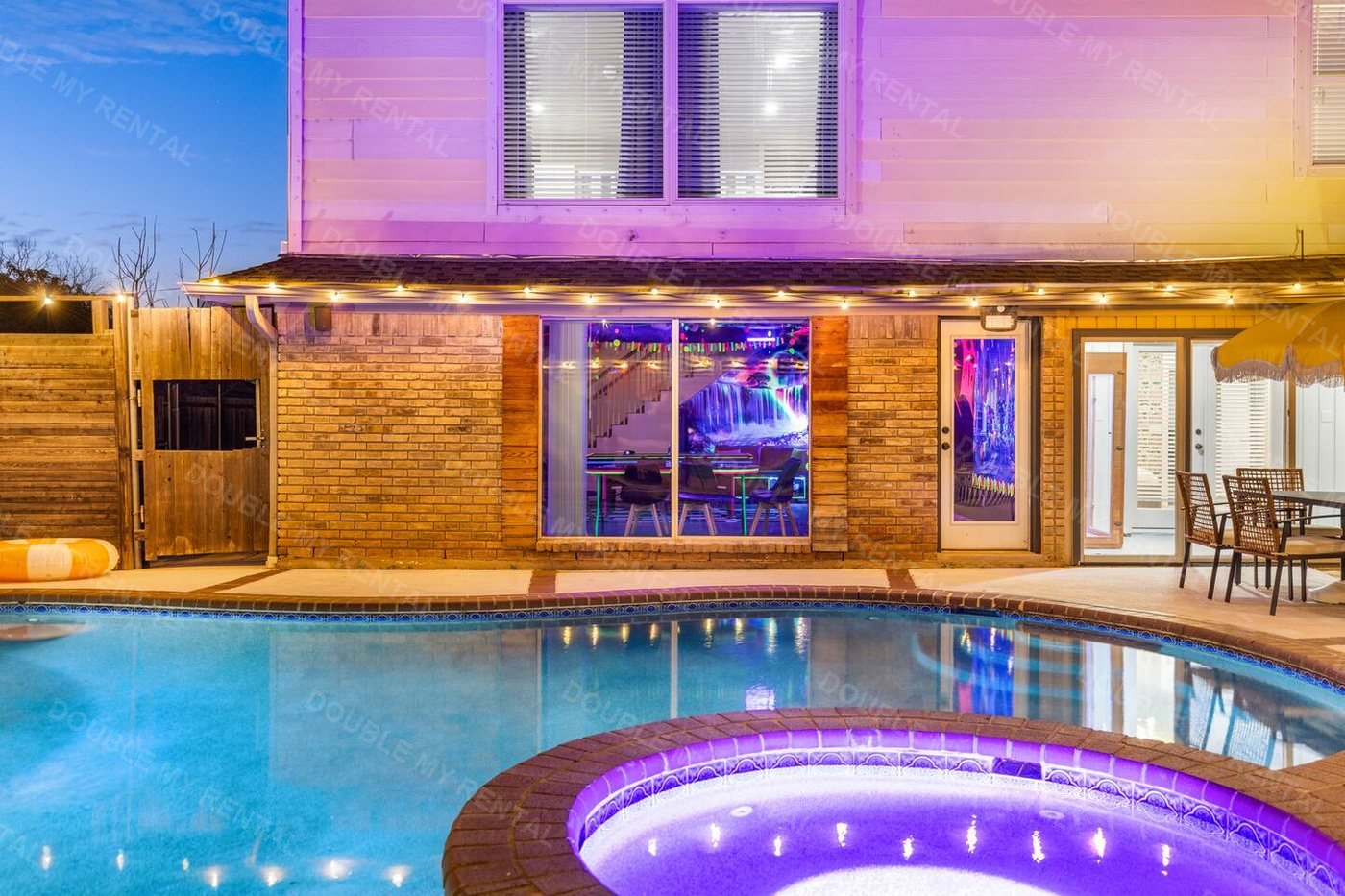


Six bedrooms, sleeps twelve. Private pool and spa, sauna, theater room, game room. First guest March 2026.
Your federal tax bill this year is 2.3× that down payment. You are spending the money either way.
Figures are host revenue from completed stays plus confirmed future bookings, as of August 2026, and are gross. Mortgage, property tax, insurance, utilities, cleaning, maintenance and management all come out of this before anything reaches the owner. Yield is quoted against purchase price, which is the standard convention, and is not a return on the cash invested. The yearly pace is calculated from 4.7 months of trading and is not a full year of results. Individual properties vary and past performance does not guarantee future results.
Most people should not do this.
The strategy only works at a certain income, with a certain tax bill, for someone who wants to own the asset. If that is not you, we will say so on the first call.
- You earn $250,000 or more a year, on your own or as a household.
- You have $150,000 or more ready to put to work.
- You are facing a six figure federal tax bill.
- You want to own the property outright, not a share of a fund.
- You want it found, built and run without you doing the work.
- Your tax bill is small. The whole strategy turns on that number.
- You want to pick the market and manage the renovation yourself.
- You are shopping for the cheapest property manager you can find.
- You may need the capital back inside a year or two.
Every engagement starts with a call and your CPA. We take on a small number of clients at a time.
My worst property outperforms most people’s best.
The floor is that high because of what I turn down. A property has to clear the numbers before I own it. Not after a remodel. Not if the market keeps climbing. Not on a projection I talked myself into.
I built the software that finds them, the standard that furnishes them and the engine that prices them. All three were built to run my own money. They still do, and they are the same three we point at your house.
Chi Ta / Founder / Featured in Forbes
Before you pay the tax bill, see what it could buy.
We will look at your income, tax liability, liquid capital and borrowing capacity. Then we will determine whether the strategy makes sense for you. If it does, we will show you the type of property we would pursue.
A strategy call, at no cost and with no obligation. Answer a few questions, then choose a time from our calendar.
What happens next
- 01Answer the qualification questions and choose a time for your call.
- 02Calendly sends your booking confirmation and Zoom meeting link.
- 03If it fits, we show you the kind of property we would pursue and what it should earn.
Best fit: $250K+ household income · $150K+ liquid capital · Large federal tax liability · By application only